Hard Surface Care
scroll
A reminder from one of South Carolina’s most iconic buildings
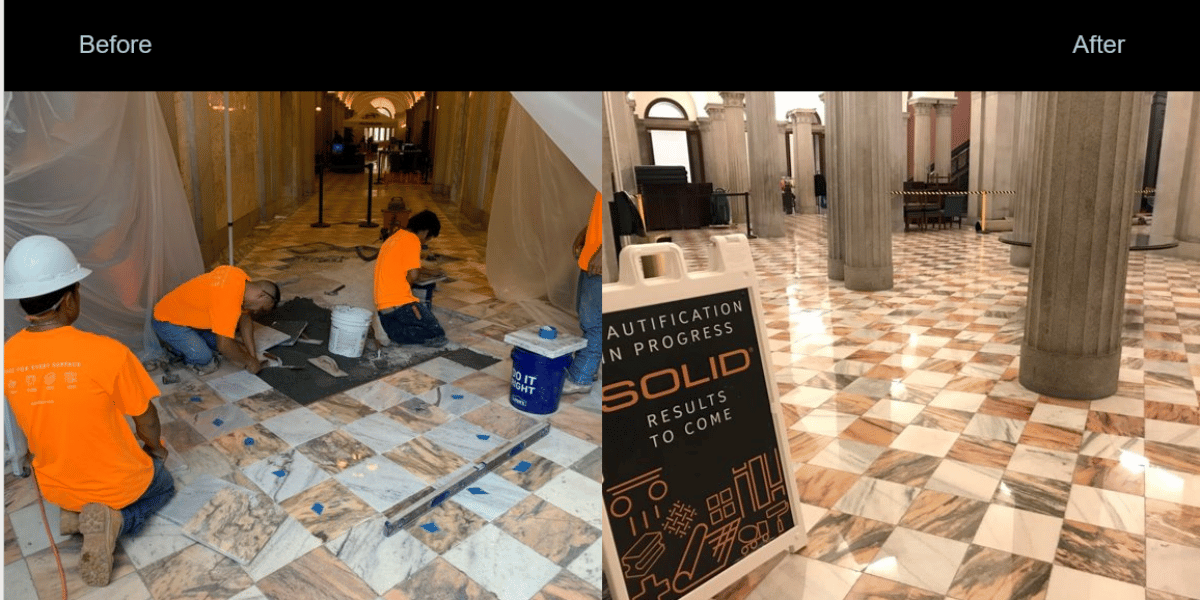
The South Carolina State House isn’t just another building. It’s a historic landmark, a working government hub, and a high-traffic facility that sees constant use.
And like any high-traffic environment, marble floor restoration becomes essential over time to maintain both performance and appearance.
So when reports surfaced that lawmakers approved an $819,000 project to address issues with the Statehouse floor, it raised eyebrows—but it shouldn’t have surprised anyone in facilities or operations.
Because here’s the reality:
Even the most prestigious buildings require ongoing surface maintenance, restoration, and reinvestment.
What actually happened (and why it matters)
The project focused on addressing problems with the Statehouse floor—including unevenness and deterioration—essentially giving it a much-needed “lift.”
This wasn’t cosmetic.
It was about:
- Safety and stability (uneven surfaces create real risk)
- Functionality in a high-traffic environment
- Preserving a historic asset
And importantly, it highlights something many facility leaders already know:
Surface issues don’t fix themselves, and waiting makes them more expensive.
The hidden truth about floors in high-traffic facilities
Whether it’s marble in a capitol building, LVT in a hospital, or concrete in a distribution center, surfaces are constantly under stress.
Over time, you’ll see:
- Wear patterns and dulling
- Uneven surfaces or shifting substrates
- Staining, etching, or embedded soils
- Safety concerns (slip resistance, trip hazards)
And here’s the kicker:
Most of these issues start small—but escalate quickly when ignored.
Reactive vs. proactive: the real cost difference
The Statehouse project is a perfect example of what happens when surfaces reach a tipping point.
When maintenance becomes reactive:
- Costs spike (large-scale repairs vs. routine care)
- Disruption increases (major projects vs. scheduled service)
- Risk rises (safety + perception)
- But with a proactive approach:
- Surfaces last longer
- Budgets stay predictable
- Facilities stay operational
This is where many organizations shift from:
“Fix it when it breaks.”
to
“Maintain it before it fails.”
What facility leaders can take away
If a historic government building requires a full floor intervention, it’s worth asking:
What’s happening beneath the surface in your facility right now?
Here are a few practical questions to consider:
- When was the last time your floors were professionally assessed?
- Are you seeing early signs of wear or unevenness?
- Do you have a programmed maintenance plan or are you reacting to issues?
Because the difference between a manageable maintenance plan and a six-figure project often comes down to timing.
Where SOLID fits in
At SOLID Surface Care, we work with facilities every day that are trying to avoid exactly this scenario.
We help teams:
- Extend the life of hard surfaces like stone, tile, concrete, and LVT
- Identify issues early—before they become capital projects
- Implement programmed maintenance plans that reduce long-term cost
Our approach is simple:
One partner. Every surface. Proactive care that keeps your facility performing at its best.
Final thought: every surface tells a story
The floors in the Statehouse have seen decades of history—and recent restoration work reinforces the importance of maintaining surfaces before issues escalate.
Your facility may not be a historic landmark, but it still tells a story to everyone who walks through it.
The question is:
What are your surfaces saying today?
As we celebrate 30 years of caring for commercial surfaces, we’re proud to continue helping facilities extend the life of their stone and other hard surfaces. If you’re interested in learning more about stone care—or any of the services we offer—contact us today.