Facility Management
scroll
Every floor care recommendation starts with understanding the surface. At SOLID, resilient floor care training helps our teams understand how flooring is made, why it responds to different conditions and which maintenance methods fit the environment.
That knowledge matters to the people responsible for commercial properties. They need a partner who can explain what is happening to their floors, recommend an appropriate approach and connect that recommendation to the needs of their facility.
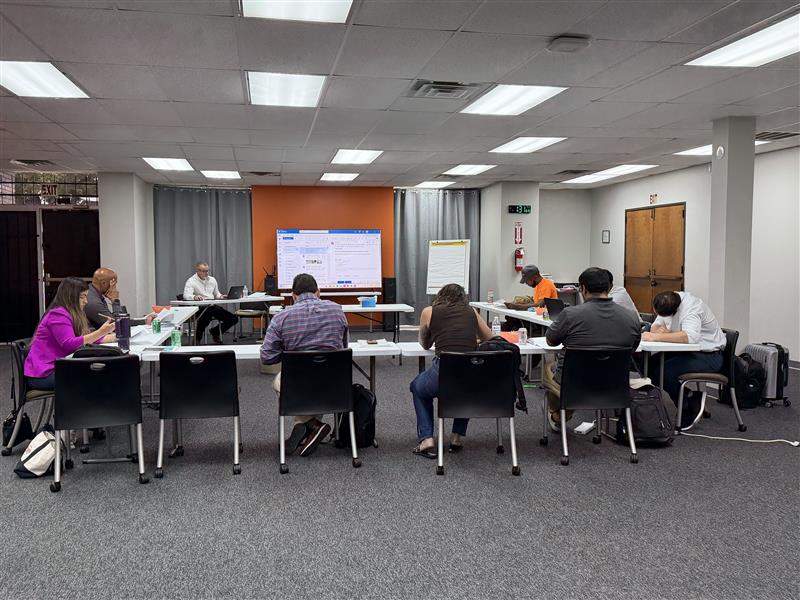
On August 25–26, ten SOLID associates gathered in Arlington, Texas, for a two-day Resilient Floor Maintenance Technician (RFMT) course. Led by Jason Ruppel, IICRC RFMT Outreach Instructor, the session continued an investment in technical education that included an April course in Hayward, California.
What is IICRC certification?
The Institute of Inspection, Cleaning and Restoration Certification (IICRC) develops standards and provides certification for the inspection, cleaning and restoration industries.
Its training and examinations help professionals demonstrate specialized knowledge and a commitment to their field. For the RFMT course, participants earn IICRC certification upon passing the course exam. Attending the class alone does not confer certification.
For SOLID, this education supports a practical goal: helping our teams make informed decisions about the surfaces our clients rely on every day.
What resilient floor care training covers
Resilient flooring includes materials such as luxury vinyl tile, sheet vinyl, rubber and linoleum. Each requires an understanding of its construction, application and recommended care.
The course covered:
- Flooring identification: Recognizing different resilient materials and their uses.
- Maintenance systems: Understanding finishes, coatings and service procedures.
- Equipment and chemistry: Selecting appropriate equipment, pads and brushes, and using chemicals safely.
- Long-term care: Considering surface protection and maintenance strategies.
- The flooring life cycle: Exploring manufacturing, installation, maintenance and removal, along with the effects of environmental conditions.
Participants examined actual flooring samples, discussed challenges they encounter in the field and connected those experiences to IICRC standards.
Throughout the course, the emphasis remained on consistent processes, proper surface preparation and methods aligned with manufacturers’ recommendations.
Connecting technical knowledge to field decisions
As the instructor, Jason helped participants connect course material to the decisions involved in caring for commercial floors.
“I enjoy instructing this course because it bridges the gap between what is specified and what actually works in the field. When the process is right and aligned with manufacturers’ specifications, the results are consistent, and that’s what ultimately builds trust with our clients.”
— Jason Ruppel, IICRC RFMT Outreach Instructor
That connection is central to SOLID’s approach. Understanding a procedure is valuable. Understanding why it fits a particular material and environment helps teams apply it with greater care and explain it clearly.
Helping sales and operations speak the same language
Technical education also strengthens conversations with clients. When colleagues across sales, technical and operations roles share an understanding of floor care, they can better connect a client’s concerns to an appropriate service recommendation.
Alex Nicolas, Senior Account Manager – Northern Florida, attended the Arlington course. For him, the value came from understanding the reasoning behind the services he discusses with clients.
“This training was great in the sense that it enabled me to understand the why behind our services.”
Alex said the course expanded his understanding of flooring construction, applications and manufacturers’ specified service procedures.
“I left that class feeling like an expert, and it made me excited to share that expertise with my network and clients.”
Chelsea May, Account Manager and fellow Arlington participant, highlighted Jason’s ability to make technical material accessible.
“Jason went over everything really thoroughly but explained it in a way everyone could understand and took the time to make sure everyone was prepared for the final exam.”
Making ongoing education part of surface care
SOLID’s investment in training reflects a broader commitment to developing its people. Sid Harriss, Executive Vice President – East, explained the leadership perspective behind that commitment:
“Ongoing education is a cornerstone of the SOLID way, so our involvement in the IICRC is crucial to reinforcing that principle year after year.”
For clients, that investment supports clearer explanations, informed maintenance recommendations and a shared understanding of how to care for their surfaces.
Have questions about your resilient flooring? Connect with SOLID to discuss its condition, your maintenance needs and an approach suited to your facility.
Frequently asked questions about resilient floor care training
What is resilient floor care training?
Resilient floor care training teaches professionals how to identify and maintain flooring such as luxury vinyl tile (LVT), sheet vinyl, rubber and linoleum. Topics include maintenance procedures, equipment selection, safe chemical use and manufacturers’ recommendations.
What does IICRC RFMT stand for?
IICRC stands for the Institute of Inspection, Cleaning and Restoration Certification. RFMT stands for Resilient Floor Maintenance Technician. Participants earn this IICRC certification upon passing the course exam.
Why does SOLID invest in technical training?
SOLID invests in technical training to strengthen its teams’ understanding of flooring materials and appropriate maintenance methods. Bringing sales, technical and operations colleagues together also helps them explain service recommendations clearly to clients.
How does this training support commercial facilities?
The training helps SOLID teams consider the flooring material, its condition, the facility environment and manufacturers’ recommendations when discussing maintenance needs. This knowledge supports informed decisions about ongoing surface care.